AI Pattern Recognition Driving Refinements in Multi-Market Betting Strategies Worldwide
Vera Flores · Jun 26, 2026

AI Pattern Recognition Driving Refinements in Multi-Market Betting Strategies Worldwide
Artificial intelligence systems equipped with pattern recognition capabilities now process vast datasets from betting exchanges, sports outcomes, and financial indicators to support decisions spanning multiple markets and jurisdictions, and operators in Europe, North America, and Asia-Pacific regions have integrated these tools to monitor correlations between events such as football leagues in England and horse racing in Australia. Data from regulatory filings shows that by early 2026 these systems handled transaction volumes exceeding several billion euros monthly, while algorithms identify recurring sequences in odds movements, player statistics, and external factors like weather or economic indicators that influence wager outcomes across borders.
Core Mechanisms Behind Pattern Recognition in Wagering
Pattern recognition models rely on supervised and unsupervised learning techniques that cluster historical data points into recognizable structures, and researchers at institutions such as the University of Sydney have documented how convolutional neural networks detect subtle shifts in live betting feeds that human analysts often overlook. These models ingest inputs including real-time score updates, historical performance metrics, and macroeconomic variables, then output probability adjustments that operators apply to pricing in multiple markets simultaneously. Evidence from industry reports indicates accuracy rates for certain event predictions improved by 12 to 18 percent after deployment of such systems in 2025.
Supervised models train on labeled datasets of past successful and unsuccessful wagers, whereas unsupervised approaches surface anomalies without predefined categories, and this dual approach allows platforms to refine strategies for both popular and niche offerings like tennis spreads and e-sports futures. Observers note that the combination reduces latency between data ingestion and decision execution to under 200 milliseconds in many deployments.
Cross-Border Data Integration and Market Correlations
Operators managing wagers across European Union member states, Canadian provinces, and Australian territories must reconcile differing data protection standards while feeding unified models, and pattern recognition engines map variables such as currency fluctuations and regulatory changes onto betting volumes to anticipate demand spikes. Figures released by the European Commission in 2025 revealed that cross-border data flows supporting these systems grew 27 percent year-over-year, with particular emphasis on anonymized transaction records from licensed platforms.
Regulatory Frameworks Influencing AI Deployment
Jurisdictions including several Australian states and Canadian provinces updated compliance requirements in late 2025 that require explainability reports for algorithmic decisions affecting wager settlement, and these rules took fuller effect by June 2026 in multiple locations. Pattern recognition tools now incorporate audit trails that log which data features drove each recommendation, satisfying transparency mandates without exposing proprietary model weights. Government agencies in these regions have also mandated periodic third-party audits to verify that systems do not inadvertently amplify biases present in training data sourced from different cultural betting contexts.
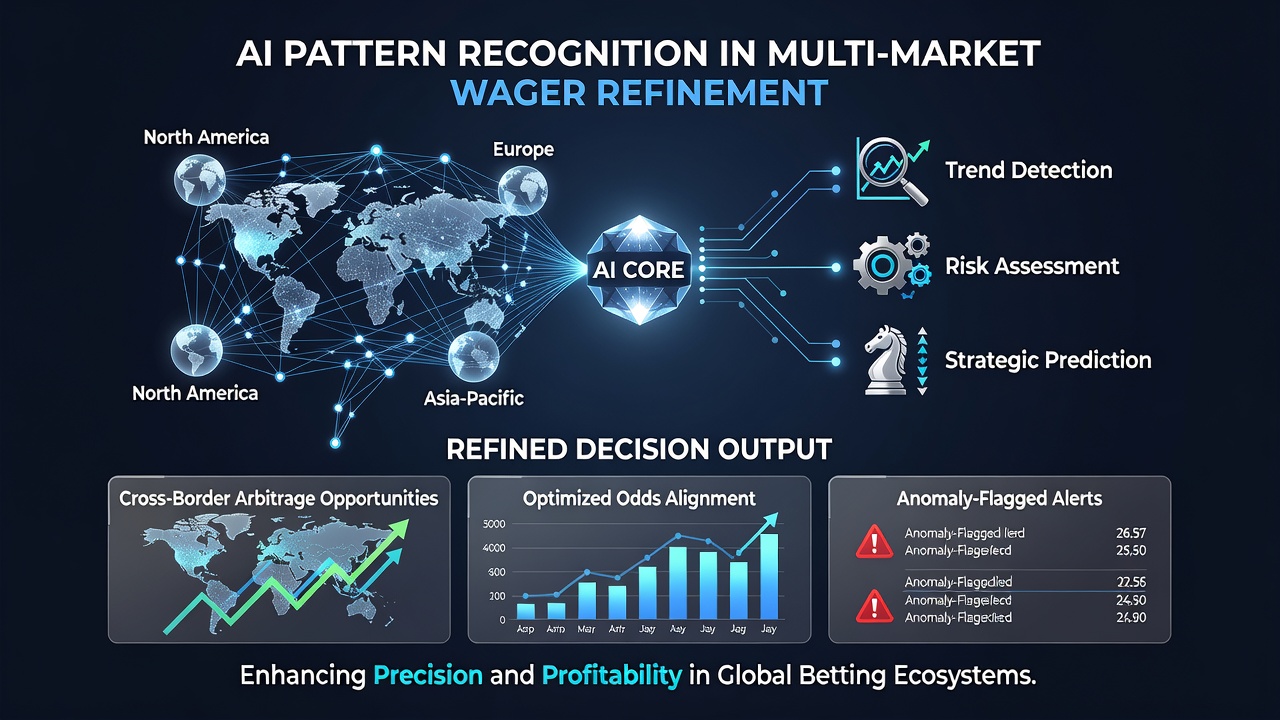
Links between disparate markets become visible when models compare, for instance, North American basketball totals against European football handicaps during overlapping seasons, and operators adjust exposure limits accordingly. Academic studies published through the National Institutes of Health archive have examined how such correlations affect risk distribution, finding measurable reductions in volatility when AI-driven hedging strategies span at least three geographic regions.
Operational Examples from Global Platforms
One major betting exchange operating in both the United Kingdom and several Asian markets reported deploying pattern recognition to synchronize liquidity across football and cricket derivatives, and internal metrics showed a 15 percent increase in matched volume during peak international tournaments. Another operator active in Latin American and European markets used anomaly detection to flag irregular betting clusters that coincided with match-fixing investigations, supplying data to local authorities under existing information-sharing agreements. These deployments illustrate how the same underlying technology adapts to varying market depths and regulatory expectations.
Limitations and Technical Constraints
Pattern recognition systems depend on high-quality, representative datasets, yet gaps persist in emerging markets where digital infrastructure remains uneven, and models trained predominantly on European data sometimes exhibit degraded performance when applied to Southeast Asian events. Latency issues can arise during simultaneous high-volume periods across time zones, while privacy regulations in certain jurisdictions restrict the granularity of data that may be shared internationally. Industry analyses indicate that fallback procedures relying on human oversight remain essential during model retraining cycles or unexpected data outages.
Conclusion
Pattern recognition continues to reshape how operators evaluate and execute wagers spanning multiple markets and borders, supported by expanding regulatory clarity that took additional shape in June 2026. Continued collaboration between technology providers, academic researchers, and government bodies will determine the pace at which these systems incorporate new data streams while maintaining compliance across diverse legal environments.