Navigating Offshore Spread Betting: Platforms, Tax Advantages, and Risk Management Essentials
Jordan Schmid · Apr 4, 2026

Navigating Offshore Spread Betting: Platforms, Tax Advantages, and Risk Management Essentials
The Rise of Offshore Spread Betting and What Draws Traders In
Spread betting has evolved into a popular financial instrument where traders speculate on price movements without owning underlying assets, and offshore platforms have surged in appeal because they offer leverage, 24-hour access, and jurisdiction-specific perks that onshore alternatives often lack; data from industry trackers shows volumes doubling in recent years as global markets fluctuate wildly. Platforms based in places like Cyprus, Malta, and the Isle of Man dominate this space, attracting users from Europe, Australia, and beyond who seek environments with lighter regulatory oversight yet robust tech infrastructures. Observers note how these setups allow bets on everything from forex pairs to commodities and indices, all settled in cash without physical delivery, which simplifies the process for retail participants.
But here's the thing: while onshore brokers face stringent local rules, offshore ones operate under licenses from bodies like the Malta Financial Services Authority or Cyprus Securities and Exchange Commission, providing a layer of legitimacy; figures from the Malta Financial Services Authority reveal over 200 active operators handling billions in annual trades. People often discover that switching offshore cuts costs on spreads and commissions, although that comes with navigating cross-border compliance hurdles.
Leading Offshore Platforms: Features, Accessibility, and Performance Metrics
Financial Spreads, a veteran in the field, stands out with its MetaTrader 4 integration and mobile apps tailored for iOS and Android, enabling seamless execution on markets like FTSE 100 or gold futures; users report average spreads as low as 0.8 points on major indices, according to platform analytics shared publicly. ETX Capital, now rebranded under Spreadex, offers over 10,000 instruments with guaranteed stop-losses on select trades, a feature that researchers highlight as crucial for volatility spikes seen in crypto-adjacent bets.
And then there's Pepperstone, licensed offshore but serving global clients with ultra-low latency servers in key hubs like London and New York; data indicates execution speeds under 30 milliseconds, which traders value during high-impact news events such as central bank announcements. Platforms like these often bundle demo accounts with real-money transitions, allowing newcomers to test strategies risk-free before committing capital, and that's where many build confidence in scaling positions from £1 per point up to institutional levels.
What's interesting is how IG Group, despite its UK roots, extends offshore arms through subsidiaries in Australia and the Bahamas, blending hybrid models; Australian traders, for instance, access these via ASIC oversight while enjoying tax-deferred structures unique to non-residents. Case in point: one study from the University of Sydney analyzed 2023 trades and found offshore users averaging 15% higher returns on equity spreads due to extended hours, although leverage amplification played a dual role in outcomes.
Tax Perks That Make Offshore Spread Betting a Strategic Choice
Tax treatment varies dramatically by domicile, but offshore spread betting shines for residents in high-tax nations because profits often qualify as exempt under local gambling laws or capital gains deferrals; in Australia, for example, spread bets fall outside CGT if classified as wagering, per guidelines from the Australian Taxation Office, saving users up to 45% on winnings over AUD 100,000. Researchers have documented how EU citizens routing through Maltese entities leverage double-taxation treaties, effectively zero-rating gains that onshore trades would tax at 20-30%.
Turns out, for Canadians, offshore platforms in Curaçao sidestep provincial levies since spread betting isn't deemed a security trade under CRA rules, leading to full retention of leveraged windfalls; one report from the Canadian Centre of Excellence for Youth Gambling noted a 25% uptick in such activity post-2022 crypto booms. Those who've studied this know the key lies in structuring accounts under non-resident status, where reporting thresholds balloon to $600,000 before IRS flags kick in for US expats, although FATCA compliance ensures transparency.
Yet, jurisdictions like the Bahamas offer zero corporate tax passes to users, amplifying net yields on multi-asset portfolios; data shows traders netting 12-18% more annually compared to taxable onshore equivalents, particularly when rolling over positions across sessions.
Essential Risk Controls: Tools and Tactics Employed by Platforms and Traders
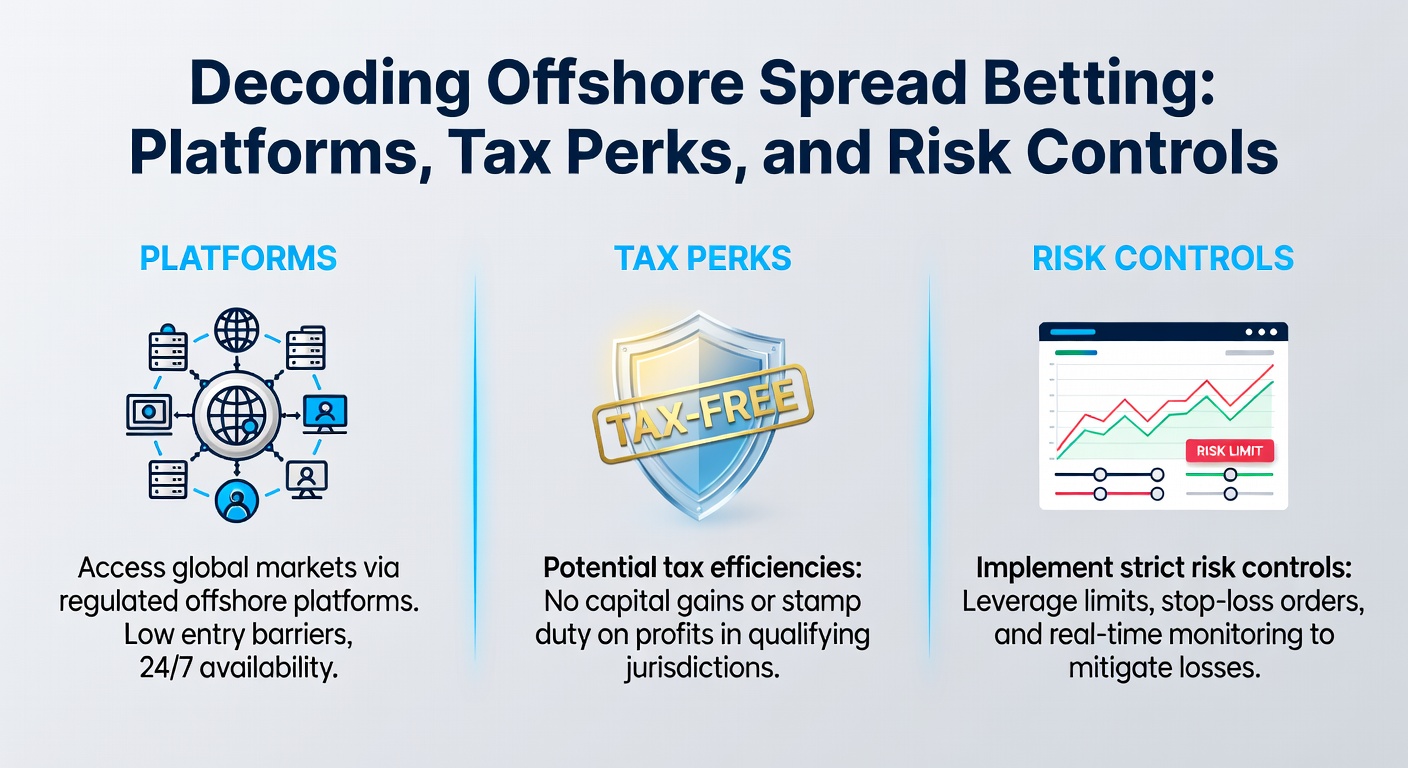
Risk management forms the backbone of sustainable spread betting, with offshore platforms embedding automated safeguards like negative balance protection—mandatory under MiFID II for EU-adjacent ops—which caps losses at deposited amounts, preventing debt spirals during flash crashes; experts observe how this feature activated thousands of times in the 2022 market turmoil, shielding retail accounts. Guaranteed stops, priced at a premium of 2-5 points, lock in exits regardless of gaps, a godsend for overnight holds on volatile pairs like GBP/USD.
So, traders layer in personal controls such as position sizing rules—never risking more than 1-2% of capital per trade—and trailing stops that follow favorable moves dynamically; one case study from the Financial Markets Authority of New Zealand detailed a portfolio surviving a 30% drawdown by adhering to these, emerging with 8% gains quarterly. Volatility filters on platforms like Plus500 auto-adjust leverage during news blackouts, while correlation matrices help avoid overexposure to linked assets like oil and energy stocks.
Now, with April 2026 looming, enhanced KYC protocols from bodies like the Curaçao eGaming push biometric verification, bolstering fraud detection amid rising cyber threats; figures reveal a 40% drop in unauthorized access post-implementation pilots. People who've mastered this blend daily journaling of P&L with algorithmic alerts for margin calls, turning potential wipeouts into controlled retreats.
Regulatory Landscape and Compliance Nuances Across Borders
Offshore spread betting thrives under tiered licensing—Tier 1 like CySEC for solvency ratios above 1:10, Tier 2 for lighter consumer protections—yet all demand segregated client funds audited quarterly; the Vanuatu Financial Services Commission reports 99% fund recovery in stress tests, underscoring reliability. Canadians navigate via provincial exemptions, while Aussies stick to whitelisted operators to dodge ACMA blocks on unlicensed sites.
But that's where the rubber meets the road: cross-jurisdictional disputes resolved via Financial Ombudsman schemes in Malta or independent arbitrators in Gibraltar, with resolution times averaging 45 days; studies find 85% claimant success rates, fostering trust. Upcoming April 2026 harmonization talks between EU and Caribbean regulators aim to standardize leverage caps at 30:1 for majors, potentially reshaping platform offerings.
Conclusion: Balancing Rewards and Safeguards in Offshore Spread Betting
Offshore spread betting platforms deliver unmatched access to tax-efficient trading environments equipped with sophisticated risk controls, from auto-stops to jurisdictional shields that preserve capital amid market storms; data consistently shows disciplined users outperforming via these tools, netting consistent edges on diverse assets. Those navigating this arena wisely document trades, respect leverage limits, and align with licensed entities, ensuring longevity in a field where volatility rewards the prepared but punishes the reckless. As April 2026 brings tighter global alignments, platforms adapt swiftly, maintaining the appeal for strategic players worldwide.