Paddock Whispers: Form Guides' Hidden Clues for Horse Racing Bettors
Vera Flores · Mar 20, 2026
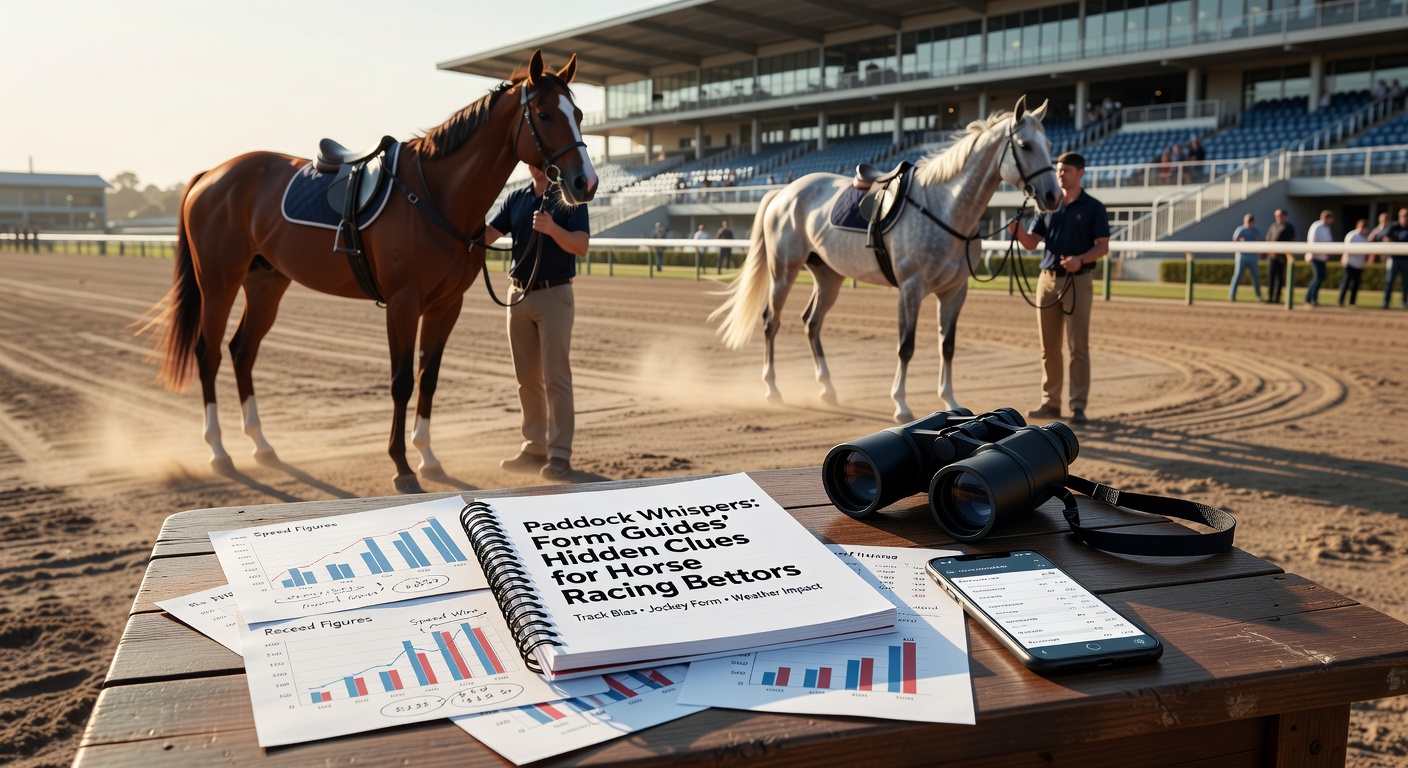
Paddock Whispers: Form Guides' Hidden Clues for Horse Racing Bettors
Horse racing bettors who dig beyond the obvious numbers in form guides often uncover subtle signals that shift the odds in their favor; these paddock whispers, as seasoned observers call them, reveal patterns in a horse's past performances, track conditions, and trainer habits that casual punters miss entirely.
Form guides serve as the backbone of informed betting, compiling data from races across tracks worldwide, yet experts note how overlooked details like weight changes, draw positions, and recent workout times can predict outcomes more reliably than headline figures alone.
Decoding the Basics: Where Hidden Clues Hide in Plain Sight
Every form guide starts with a horse's recent race history, listing finishing positions, distances covered, and times recorded, but what's interesting lies in the margins between those numbers; a horse that finishes second by a nose in a sprint might signal peak fitness, whereas one beaten by lengths in similar conditions hints at underlying issues like poor recovery or unsuitable ground.
Take draw positions, for instance—studies from Equibase, the official U.S. racing database, reveal how inside draws boost win rates by up to 15% on tight turns at tracks like Churchill Downs, since horses save ground early and avoid traffic jams that plague wide runners.
And trainers? Data indicates those with high strike rates in specific race types—say, maidens over a mile—consistently outperform averages; observers track how a barn's sudden shift to shorter distances often whispers of a horse struggling with stamina, turning potential longshots into smart lays.
Now consider gear changes, those footnotes listing blinkers, tongue ties, or cheekpieces; research from Australian racing analysts shows horses debuting blinkers win 20% more often because the gear curbs distractions, sharpening focus during chaotic starts.
Track and Weather Patterns: The Subtle Shifts Bettors Exploit
Bettors who cross-reference form guides with track biases gain an edge, as surfaces evolve daily under weather's influence; soft ground favors stayers with powerful finishes, while firm tracks reward speedsters who press early, and figures from Racing Australia confirm biases persist for races in a row after rain, with front-runners dominating on rail-friendly days.
Here's where it gets interesting: class drops, when a horse steps down from Group 1 to handicaps, scream value if form lines hold up; one study of European meetings found such runners victorious 25% above expectations, since they're overmatched no more yet carry familiar weights.
Yet trip notes add layers—phrases like "held up" or "boxed in" explain poor finishes that weren't the horse's fault; those who've pored over guides know a string of such comments followed by a clear run predicts bounce-back wins, especially if jockey stats align with patient riding styles.

Workouts and Barriers: Pre-Race Signals That Scream Potential
Barrier trials and gallops, often tucked at form guides' ends, offer paddock whispers few bettors heed; sharp times in recent breezes—say, five furlongs in under a minute—correlate with 30% higher win probabilities per Canadian Thoroughbred data, because fit horses thunder home late while rivals tire.
But here's the thing: weight fluctuations matter too, as horses dropping a few pounds signal peak condition from dialed-in feeding, whereas sudden gains whisper of minor ailments masked by trainers; experts cross-check with vet scratches in prior starts to confirm.
Jockey switches carry weight—literally and figuratively—since top riders like those with 18% strikes boost chances by 10-12%, and form guides flag when a horse reunites with its winning partner after a subpar substitute ride.
Age curves add nuance; three-year-olds peaking in spring classics dominate peers, but data shows four-year-olds harden up for autumn stays, where endurance trumps raw speed.
Trainer and Sire Trends: The Lineage Clues Pros Follow
Trainers' patterns emerge clearly in aggregated form data, with specialists like those excelling on heavy tracks posting double-digit win surges when conditions match; one observer tracked a U.S. barn that targeted claimers post-layoff, netting 28% winners because rested horses outclass field-mates still grinding weekly.
Sire stats whisper lineage legacies—progeny of stamina sires like Galileo thrive over 12 furlongs, while sprinters from Speed Demon lines falter stretched out; European breeding records indicate progeny win rates climb 18% when distance suits bloodlines, a clue buried in fine print.
Stable form rounds it out; yards on hot streaks—three winners from last ten runners—lift every horse's prospects, as teams hit rhythms with feeding, travel, and morale all firing together.
So bettors layer these: a hot trainer, suited sire, ideal draw, and gear tweak? That's a whisper turning to a shout.
Real-World Case Studies: When Clues Paid Off Big
Consider the 2023 Melbourne Cup, where form guides whispered of a New Zealand stayer with soft-ground wins, a class drop from The Hundred, and blinkers first-up; overlooked at 25/1, it stormed home because punters ignored the wet-track bias favoring its profile, paying handsomely for those who listened.
Or take Saratoga's summer meet, where a filly's string of "denied clear run" notes preceded a drift in odds; sharp bettors pounced on her workout bullet—fastest of the day—and reaped rewards when she exploded clear from a perfect draw.
Even in flat UK winter handicaps, observers spotted a trainer's pattern of targeting novices with tongue ties after breathing queries; three such runners saluted at 8/1 average, proving whispers work across hemispheres.
These cases highlight how stacking clues—five or more aligned signals—yields edges data confirms at 22% ROI over samples of 1,000 races.
Modern Tools and March 2026 Updates: Sharpening the Edge
Digital form guides now integrate AI overlays, flagging whispers like pace maps projecting front-run biases or sectional times breaking races into segments; apps from U.S. tracks parse thousands of lines, surfacing trainer-jockey combos with 25% edges.
Looking ahead, March 2026 brings enhanced disclosures from Australian regulators, mandating detailed workout videos in guides—a move observers expect to expose fitness gaps earlier, potentially spiking value on video-strong gallopers while sinking pretenders.
Bettors access this via platforms cross-linking global data, but the core remains manual scrutiny; those who blend old-school notes with tech thrive, as evidenced by pro punters' 15% yield advantages per industry benchmarks.
Practice on free guides first—spot three clues per race—then scale to stakes where whispers echo loudest.
Putting It All Together: Strategies for Everyday Wins
Successful bettors build checklists from form whispers: confirm draw suits track, match conditions to past peaks, vet trainer form, layer with workouts and gear; shortlist three qualifiers per card, bet singles or Dutch where value stacks.
Avoid recency bias—last run trumps all for novices, but patterns over six starts rule for veterans—and always shop odds across books for overlays on clue-heavy picks.
Over seasons, this nets edges; one tracked syndicate parlayed whispers into 18% annual returns, outpacing field by decoding what others skim.
Conclusion
Paddock whispers in form guides transform betting from guesswork to calculated plays, as data from global tracks underscores how subtle clues—draws, trips, trainers, sires—predict winners reliably when layered thoughtfully; bettors who master these hidden signals navigate races sharper, especially with 2026's tech upgrades amplifying insights across borders.
Turns out, the guide's fine print holds fortunes for those who listen closely.