Satellite Imagery Enhances Precision in Odds for Overseas Horse Racing Markets
Leon Keller · May 31, 2026

Satellite Imagery Enhances Precision in Odds for Overseas Horse Racing Markets
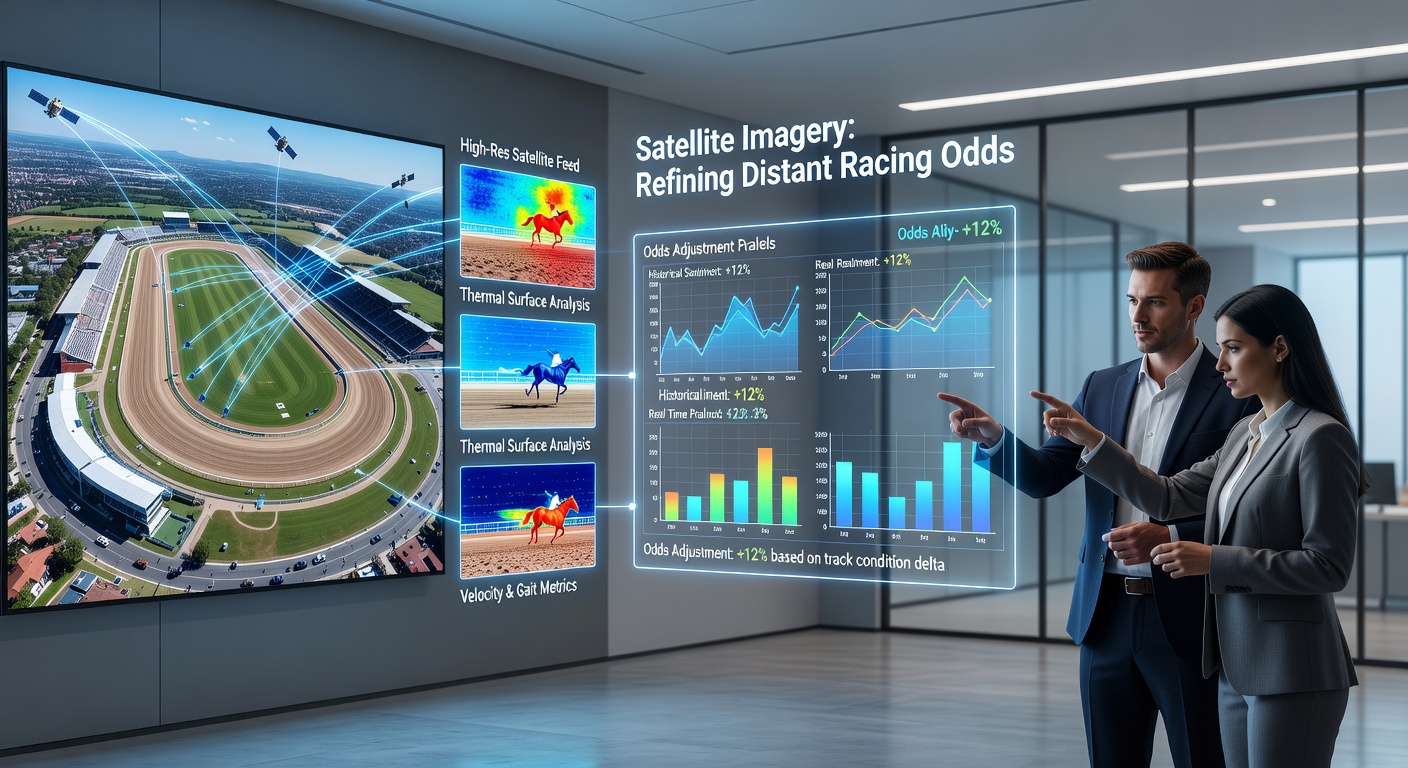
Bookmakers handling wagers on horse races held thousands of miles away now incorporate satellite imagery to adjust probability models with greater accuracy, and this shift gained momentum through expanded data access in early 2026. Remote events in regions such as Australia and parts of Asia present limited ground-level reporting, yet high-resolution orbital captures supply details on track surfaces, vegetation changes, and weather patterns that influence runner performance.
Data Sources Driving Updated Calculations
Commercial satellite providers deliver multispectral images that reveal soil moisture levels and grass density across entire circuits, and these inputs feed directly into algorithms used by odds compilers. Researchers at institutions focused on geospatial analysis note that such layers integrate with historical performance records to refine expected finishing times, while government agencies in Australia supply complementary meteorological overlays from their own orbital assets. One study released in spring 2026 demonstrated measurable improvements in forecast reliability when satellite-derived variables replaced estimates based solely on trainer reports.
Operators monitoring events in distant time zones benefit because imagery timestamps align with race schedules, allowing real-time adjustments before betting markets close. And the European Space Agency archives furnish consistent coverage that fills gaps left by ground sensors during heavy rain or dust events common at certain southern hemisphere venues.
Integration With Existing Models
Odds engines combine satellite pixels with pace figures and jockey statistics through machine learning pipelines, whereas earlier versions relied on delayed telex updates or sparse video feeds. Data shows that track bias indicators extracted from orbital views correlate strongly with sectional times recorded at previous meetings, and this correlation strengthens when models account for seasonal vegetation shifts visible only from above. Those who process the feeds report that cloud-penetrating radar bands add value during monsoon periods that affect circuits in southeast Asia.
Case Applications at Specific Venues
Take the example of a major meeting held in regional Queensland where satellite analysis flagged an unusually dry inside rail weeks before the event, prompting compilers to lengthen odds on front-runners expected to favor that path. Similar adjustments occurred at a Japanese track when imagery captured post-typhoon drainage patterns that altered going descriptions circulated by local stewards. Observers note these refinements occur without requiring additional staff on site, which reduces costs for firms covering multiple international calendars simultaneously.
Figures from industry reports indicate a rise in the volume of satellite-augmented models deployed for southern hemisphere winter racing, and this trend aligns with broader availability of sub-meter resolution products released throughout 2025 into May 2026. Companies handling offshore books now cross-reference imagery timestamps against official results to validate inputs before finalizing starting prices.
Regulatory and Technical Considerations
Authorities in several jurisdictions require disclosure when non-traditional data sources contribute to published probabilities, and this requirement has prompted operators to document satellite provenance alongside traditional statistics. Technical teams address latency issues by caching recent passes over key circuits, which ensures fresh layers remain available even when live internet connections fluctuate during overnight sessions. What's interesting is how resolution improvements from newer satellite constellations allow differentiation between adjacent training gallops and actual race-day surfaces, adding another variable to multivariate regressions.
Academic papers published through Canadian research networks explore error margins when orbital data substitutes for on-site inspections, and those findings suggest that combined datasets reduce variance in predicted margins by measurable percentages across sample race fields. Yet integration demands careful calibration because lighting angles and atmospheric corrections can introduce artifacts if not filtered through established protocols.
Future Developments on the Horizon
Continued launches scheduled beyond May 2026 promise higher revisit rates over southern racing regions, and this increased frequency supports intraday updates that were previously impossible. Partnerships between imagery vendors and betting technology firms aim to embed automated alerts when track conditions diverge from seasonal norms, allowing compilers to recalibrate spreads before markets attract significant volume. Data from these emerging streams also supports cross-event comparisons that link distant circuits sharing similar soil profiles.
Industry organizations tracking technological adoption report steady uptake among mid-sized operators who previously lacked resources for proprietary scouting networks. The approach extends to harness events as well, where surface consistency plays an even larger role in final outcomes.
Conclusion
Satellite contributions continue to expand the information base available for calculating probabilities on remote horse racing fixtures, and ongoing refinements in both sensor technology and analytical methods support tighter alignment between modeled and observed results. As coverage density increases, the role of orbital data within multi-source frameworks appears set to grow across additional racing jurisdictions.