Satellite Systems Transforming Access to Distant Horse Race Wagering
Leon Lang · Jun 10, 2026
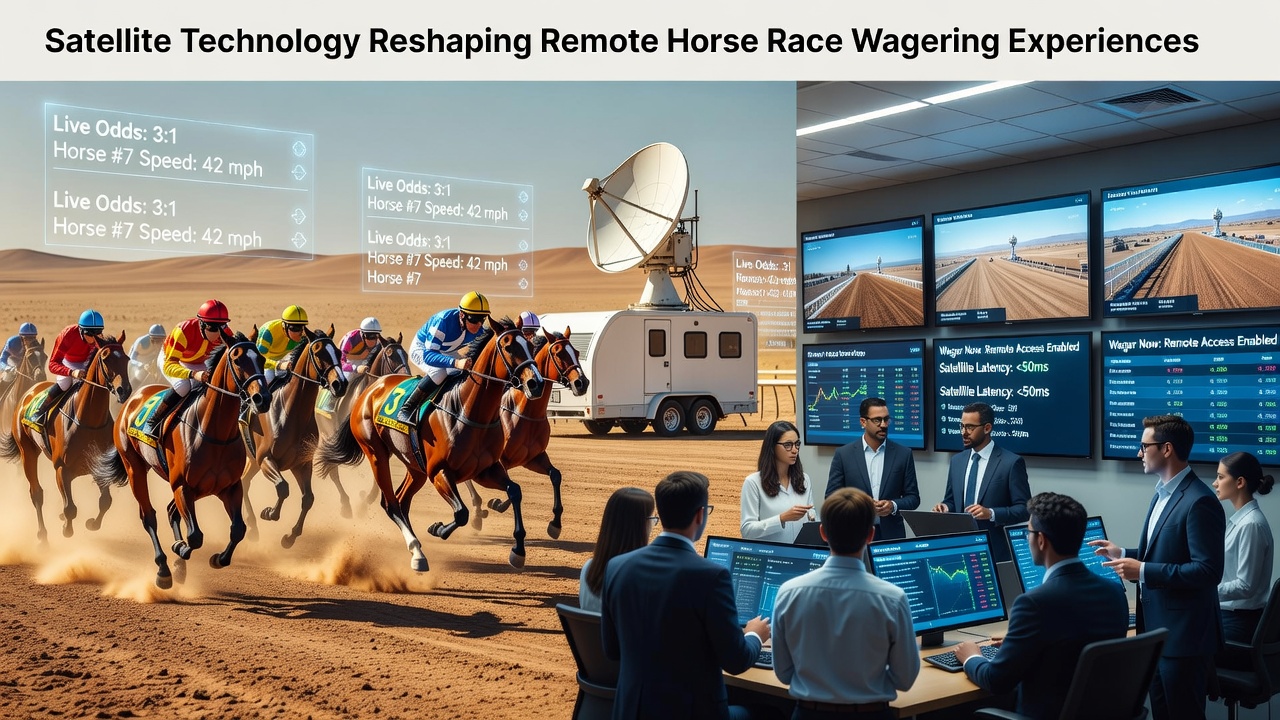
Satellite Systems Transforming Access to Distant Horse Race Wagering
Advances in satellite communications have opened new pathways for horse race wagering in locations far from traditional infrastructure, allowing operators and bettors to connect through space-based networks rather than relying solely on terrestrial cables or fiber lines. Those who've studied this evolution note that satellites deliver consistent data streams even in mountainous regions or rural tracks where ground networks fall short, and the technology supports everything from live video feeds to instant odds updates.
Early Developments in Satellite-Enabled Betting Networks
Initial experiments with satellite links for racing data date back several decades, yet widespread adoption accelerated once commercial providers launched constellations capable of handling high-bandwidth video alongside transactional traffic. Observers point out that companies began deploying very small aperture terminal equipment at remote racetracks and off-track betting sites, which meant signals could travel to geostationary satellites and bounce back to central processing hubs without interruption from weather or terrain. Research from industry reports shows these setups reduced latency to levels acceptable for real-time wagering decisions, while figures from regulatory filings indicate steady growth in licensed remote terminals across multiple continents.
Key Technologies Driving Remote Horse Race Experiences
Modern satellite platforms combine high-throughput beams with low-earth orbit systems to cut transmission delays further, and this combination proves especially useful during multi-race events where bettors need simultaneous access to several tracks. Data indicates that protocols such as DVB-S2X allow efficient compression of high-definition race footage, so viewers in isolated areas receive clear images without the buffering common on congested land lines. Experts have observed that integrated GPS modules also help verify the location of mobile betting units, which satisfies licensing requirements in jurisdictions that demand precise geographic controls on wagering activity.
What's interesting is how these same networks carry encrypted transaction packets, ensuring that bets placed from distant terminals reach tote systems with the same security standards applied at major venues. According to communications authorities in North America and Asia-Pacific regions, spectrum allocations dedicated to broadcasting and mobile satellite services continue to expand, giving operators more options for scaling capacity during peak racing seasons.
Practical Applications in Isolated Regions
Take one operator who equipped a network of outback betting stations in Australia with satellite terminals, and the result was uninterrupted coverage of international race meetings even when local internet dropped during storms. Similar deployments appear in parts of Canada and the American Southwest, where state and provincial regulators permit satellite-linked wagering so long as operators maintain audit trails and identity verification. Those who've examined usage patterns report that bettors in these areas place wagers on both local and overseas events at volumes comparable to urban centers once connectivity stabilizes.
Yet challenges remain around equipment costs and maintenance in harsh environments, although declining hardware prices have made smaller terminals viable for independent bookmakers. Industry organizations note that training programs now focus on rapid troubleshooting of antenna alignment and signal strength, which keeps downtime minimal during important race days.

Regulatory and Infrastructure Considerations Through 2026
By June 2026 several jurisdictions plan to review spectrum policies that affect satellite betting services, and early indications suggest continued emphasis on interference mitigation between different orbital systems. Government agencies outside the United Kingdom, including those in the European Union and Australia, have published consultation papers outlining technical standards for next-generation terminals, which could streamline approval processes for new remote sites. Data from academic studies on digital inclusion shows that satellite connectivity correlates with increased participation in regulated wagering markets among previously underserved populations.
Operators also explore hybrid setups that switch between satellite and emerging 5G fixed-wireless links when both are available, creating redundancy that protects against single-point failures. Researchers at telecommunications institutes have documented cases where such redundancy preserved service continuity during major sporting events that drew heavy betting traffic.
Future Outlook for Satellite-Integrated Wagering Platforms
Looking ahead, integration with emerging mega-constellations promises even lower latency and higher capacity, which could support augmented-reality overlays on race broadcasts or more granular data analytics delivered directly to bettors' devices. Industry associations tracking technology adoption expect continued investment in encryption upgrades to match evolving cybersecurity requirements across different regulatory zones. Those monitoring pilot programs note that partnerships between satellite providers and racing authorities have already produced standardized interfaces for odds distribution, reducing integration time for new terminals.
Evidence from recent deployments reveals measurable improvements in transaction success rates at remote locations, and these gains encourage further exploration of satellite solutions in additional markets. Observers emphasize that ongoing collaboration between technology firms, racing bodies, and government agencies will determine how quickly these capabilities expand beyond current footprints.
Conclusion
Satellite technology continues to reshape how remote horse race wagering operates by bridging connectivity gaps that once limited participation, and the combination of video delivery, secure transactions, and regulatory compliance tools creates a foundation for broader access. As spectrum policies evolve and new orbital systems come online, the infrastructure supporting distant betting terminals stands to grow more robust without sacrificing the speed or reliability required for live events. Data from multiple regions indicates sustained interest in these solutions, suggesting they will remain a practical component of the global racing and wagering landscape.