Virtual Reality Meets Live Dealers: Shifting Decision Making in Remote Gambling Environments
Jordan Schmid · Jul 24, 2026

Virtual Reality Meets Live Dealers: Shifting Decision Making in Remote Gambling Environments
Virtual reality technology now merges with live dealer formats on remote platforms through headsets that render three-dimensional casino environments and real-time dealer feeds. Players enter simulated rooms where tables, chips, and avatars replicate physical spaces while live video streams connect to actual dealers in studios or land-based locations. Data from platform operators shows that this setup transmits player movements and gestures back to the dealer interface, creating synchronized interactions that differ from standard video streams.
Integration relies on motion tracking sensors, spatial audio, and low-latency streaming protocols that align virtual actions with physical dealer responses. Researchers at the University of Nevada's gaming technology lab documented how these systems reduce perceived distance between remote users and live tables, leading participants to adjust wager timing and size based on visual cues unavailable in two-dimensional interfaces.
Technical Components Driving the Merge
Hardware includes standalone VR headsets equipped with inside-out tracking alongside software layers that overlay live dealer video onto virtual table surfaces. Developers employ WebXR standards and proprietary rendering engines to maintain frame rates above 90 per second, which prevents motion sickness during extended sessions. Live dealer studios incorporate depth cameras that capture card handling and chip placement in real time, feeding positional data into the VR environment so players see accurate physics simulations of card deals and payouts.
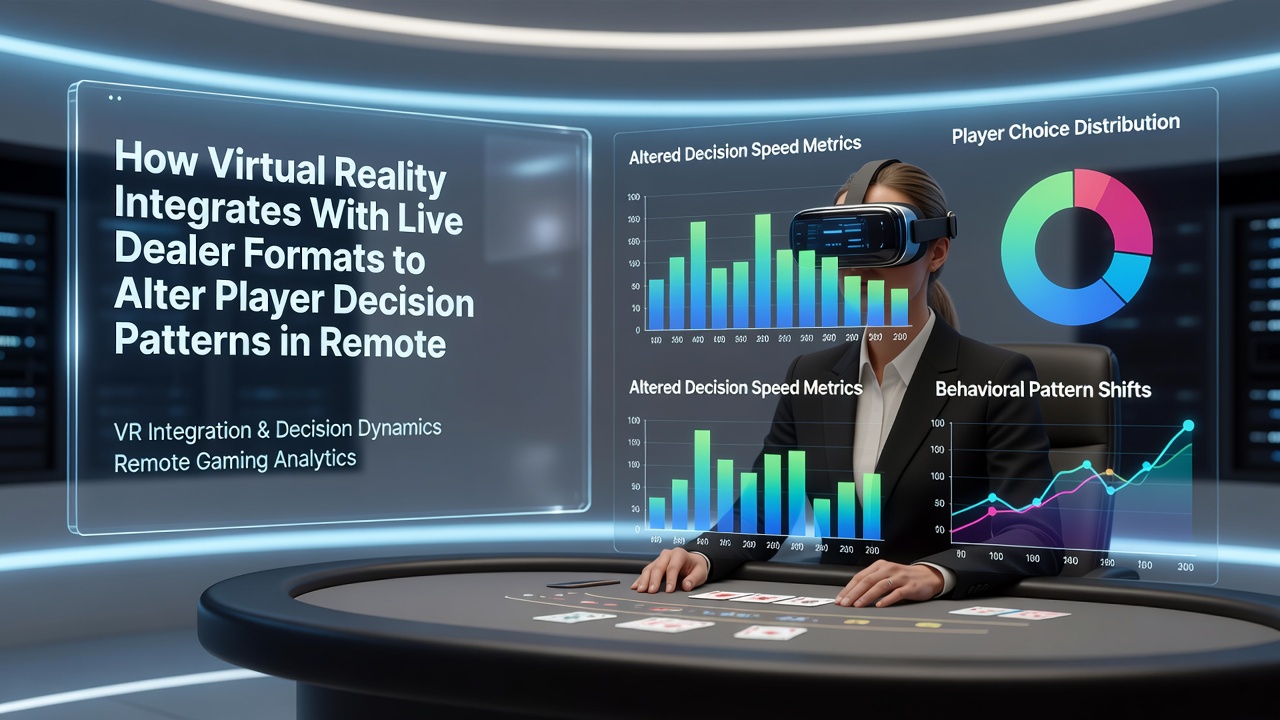
Platform analytics indicate that users in VR sessions initiate bets 15 to 20 percent faster on average than those using desktop live dealer streams, according to internal metrics shared at industry conferences in early 2026. This speed stems from direct gaze-based selection tools that replace mouse clicks with eye-tracking confirmation and hand-gesture inputs.
Observed Changes in Player Decision Patterns
Studies tracking session data reveal that VR participants place more frequent small wagers interspersed with occasional larger bets, whereas traditional live dealer users tend toward steadier progression. The immersive visual field appears to heighten awareness of surrounding avatar reactions, prompting some players to mirror group betting trends visible in the virtual space. Evidence from Australian research institutions shows increased time spent evaluating hands before committing chips when spatial audio conveys dealer tone and ambient table sounds more vividly than flat video.
One analysis of European remote platforms found that VR sessions produced higher rates of split and double-down decisions in blackjack compared with non-VR equivalents, even when identical rules applied. Observers attribute this shift to enhanced depth perception of card positions and dealer body language that two-dimensional streams do not convey with equal clarity.
Regulatory and Platform Developments Through Mid-2026
By July 2026 several North American and Asian jurisdictions had updated testing requirements for VR gambling applications to verify that decision interfaces do not introduce unintended biases in payout calculations. The Nevada Gaming Control Board released guidelines requiring operators to log VR-specific telemetry such as head movement frequency and gaze duration for compliance audits. These logs help regulators examine whether immersion correlates with altered risk assessment over multi-hour periods.
Industry groups including the Interactive Gaming Council published aggregated reports indicating that VR live dealer traffic grew 34 percent year-over-year on licensed platforms, with the largest increases occurring in jurisdictions that approved headset-based remote play earlier in the decade. Platform operators report that session lengths extend by an average of eight minutes when users remain in VR mode, a pattern linked to reduced external distractions within the headset environment.
Data Sources and Research Findings
Academic papers from Canadian universities have examined eye-tracking data collected during VR blackjack trials, noting that participants fixate longer on dealer hand positions before finalizing insurance bets. Similar patterns emerged in roulette sessions where virtual wheel angles allowed clearer visualization of ball trajectories. These findings align with metrics released by the National Council on Problem Gambling, which tracks self-reported decision changes among users of immersive formats.
Additional evidence comes from reports issued by the Australian Communications and Media Authority, documenting how spatial audio elements in VR dealer environments influence call-bet frequency at baccarat tables. Data sets covering thousands of sessions demonstrate measurable differences in side-bet participation when players can perceive virtual chip stacks and avatar posture simultaneously.
Conclusion
Remote platforms continue to refine VR integration with live dealer streams through improved tracking accuracy and reduced latency. Available session data and regulatory filings through July 2026 demonstrate consistent shifts in wager timing, bet variety, and session duration that distinguish VR users from those on conventional interfaces. Ongoing research from multiple regions supplies operators and oversight bodies with telemetry that quantifies these behavioral variations without relying on subjective interpretation.